
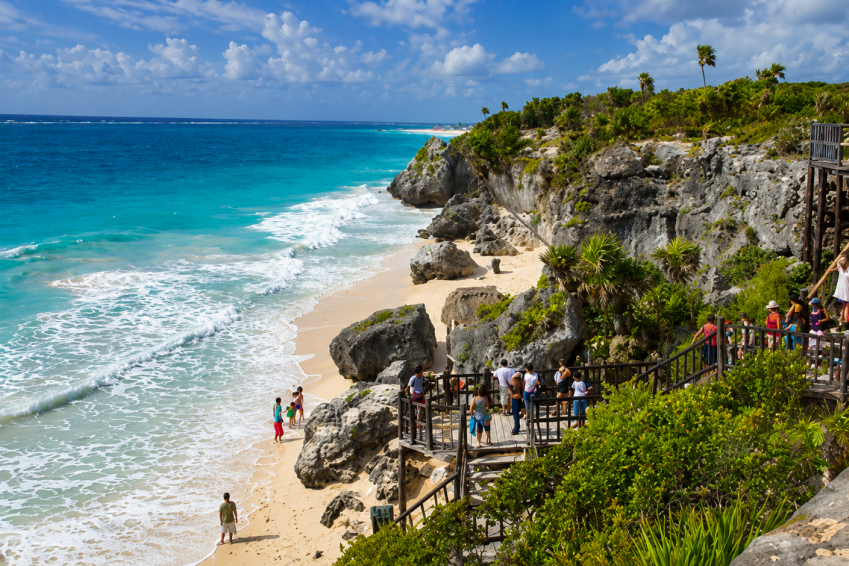
Tulum is known for three things: Mayan ruins on a cliff above the Caribbean, freshwater cenotes you can swim in, and a long stretch of white sand beach. Not many places in Mexico put all three within a short drive of each other, and that mix is the simple answer to why people keep coming back.
It has downsides too, and you’ll read about them online. Traffic can be slow, prices are high for Mexico, and parts of the beach road get crowded. This guide covers what’s good, what isn’t, and what to know before you book, written for travelers coming from the US.
What Is Tulum Known For?
Tulum is a small town on the Caribbean coast of the Yucatán Peninsula, in the state of Quintana Roo, about 80 miles south of Cancun. Travelers know it for its ruins, its cenotes, its beaches and a food scene that runs from taco stands in town to sit-down dinners along the beach road. Compared with the big resort strips farther north, it’s smaller and more spread out, and most hotels are low-rise.
The Mayan Ruins on the Caribbean Coast
The name Tulum means wall in the Yucatec Maya language, and the walls are still there. The site was a walled port city that was active until the Spanish arrived in the early 1500s. The main building, El Castillo, sits on a cliff facing the sea, which is what makes the place different from inland ruins.
The site is small, so an hour or two is enough. Go when it opens, before the heat and the tour buses arrive. Bring water, wear shoes you can walk in, and expect little shade.
If you want a bigger site, Coba is about 30 miles inland, with pyramids set in the jungle. Chichen Itza is a longer day trip, roughly two hours each way.
Cenotes Near Tulum
Cenotes are natural sinkholes filled with fresh groundwater, and the Yucatán has thousands of them. Near Tulum, Gran Cenote, Cenote Calavera and the Dos Ojos system see the most visitors. The water stays cool all year, which feels good after a hot morning, and many are good for snorkeling.
A few practical points. Go early or late to avoid crowds. Bring some cash for entry. Most cenotes ask you to rinse off before swimming and to skip regular sunscreen, so pack a biodegradable one.
The Beaches and the Water
The beaches here are soft white sand with calm, turquoise water on a good day. The long beach road has beach clubs, hotels and restaurants, while public access points are mixed in between.
One thing to plan for is seaweed. Sargassum shows up along this coast in some years and seasons, mostly in spring and summer, and it can change a lot from one week to the next. Sheltered bays north of town, like Tankah Bay, can see less of it than the main beach road, but no beach is guaranteed to be clear.
Food, From Taco Stands to Sit-Down Dinners
Eat in town at least a few times. Tacos al pastor, cochinita pibil (a slow-roasted pork dish from the Yucatán) and fresh ceviche are easy to find and cost far less than dinner on the beach road. The beach road restaurants are good but pricier, and the popular ones fill up in high season, so book ahead.
Tulum has also built a name for wellness, with yoga studios, spa treatments and temazcal, a traditional steam ritual. If that’s what you’re after, a wellness retreat in Tulum can be built around it.
Tulum vs Cancun
Cancun has the main airport, large resorts and a long hotel zone with plenty of nightlife. Tulum is smaller and slower, with more boutique hotels and rentals, but you’ll spend more time in cars or taxis getting between places. Many travelers fly into Cancun and split the trip between the two.
For ideas on how to fill your days, start with our list of the best things to do in Tulum.
Getting to Tulum From the US
Most travelers fly into Cancun International Airport (CUN), which is roughly 80 miles and an hour and a half by road from Tulum. Tulum also has its own airport (TQO), but routes from the US change often, so check with the airlines before you plan around it. Flight times from US cities to Cancun run from about 2 to 4.5 hours depending on where you start.
From Cancun you can take a shuttle, a bus, a rental car or a private driver. Agree on the price before you get in any taxi.
US citizens need a valid passport book to fly into Mexico. A passport card is not accepted for air travel. Entry rules can change, so confirm the current requirements before you go.
The Best Time of Year to Visit
The dry season runs from about December to April. It’s warm and sunny, but it’s also the busiest and most expensive stretch. From May to November it’s hotter, more humid and rainier, and hurricane season runs from June through November. Prices drop in those months and crowds thin out.
For a month-by-month look, see the best time of the year to visit Tulum.
Where to Stay in Tulum
There are three main choices. Tulum town is cheaper and close to local restaurants, but farther from the beach. The beach road puts you on the sand, with higher prices and slow traffic. The quieter coast north of town, toward Tankah and Akumal, is less crowded and a short drive from everything else.
For groups, renting a private villa in Tulum can work better than booking several hotel rooms. Bella Vita Tulum, for example, is an 8-bedroom villa in Tankah Bay that sleeps up to 20 guests. We go through the areas in more detail in our guide on where to stay in Tulum.
Things to Know Before You Go
- Money: Many places take US dollars, but pesos usually get you a better rate. Some small restaurants, cenotes and beach clubs are cash only, so carry some.
- Tipping: 10 to 15 percent is common at restaurants. Check the bill first, since some include service.
- Traffic: The beach road slows down in the afternoon. Plan your day around it.
- Sun and bugs: Bring reef-safe sunscreen and insect repellent, especially for cenotes and jungle areas.
- Safety: Tulum is a major tourist destination, and normal precautions apply, as in any busy tourist area. Use licensed taxis or arranged drivers at night, and check the US State Department travel advisory before you book.
Is Tulum Worth Visiting?
It is if you want ruins, cenotes and a beach in one trip and you’re fine with paying more than you would elsewhere in Mexico. It may not be if you want somewhere cheap, quiet and easy to get around. A middle option is to stay a little outside the busiest area and use day trips to see the rest.
FAQs
What is Tulum best known for?
Tulum is best known for its cliffside Mayan ruins, nearby cenotes, white sand beaches and its mix of restaurants and wellness options.
How many days do you need in Tulum?
Three to four days covers the ruins, a cenote or two and some beach time. Five to seven days leaves room for Coba, Sian Ka’an and slower days.
Is Tulum expensive?
It costs more than most places in Mexico, especially hotels and restaurants on the beach road. Eating in town and staying outside the beach zone brings the cost down.
Do Americans need a passport to go to Tulum?
Yes. US citizens need a valid passport book to fly into Mexico. Check current entry requirements before you travel.
Is Tulum safe for American tourists?
Most visitors have no problems, but it’s worth using the same care you would in any busy tourist destination. Check the US State Department travel advisory before booking.