Anyone researching a Tulum vacation eventually runs into the same question: is there sargassum on the beaches, and will it ruin the trip? At Bella Vita, guests ask this constantly, especially for visits between May and October. The short answer is that sargassum is a real, seasonal part of this coastline, but where you stay on that coastline makes a significant difference in how much of it you actually see.
Quick Answer: Yes, Tulum experiences seasonal sargassum, with the highest levels typically occurring between May and September. However, beach conditions vary depending on location. Protected areas such as Tankah Bay often experience less accumulation than Tulum’s more exposed beachfront, allowing many travelers to enjoy their vacation with minimal disruption.
What Is Sargassum?
Sargassum is a free-floating brown seaweed that drifts through the Atlantic and Caribbean in large mats. In small amounts, it is a normal and even beneficial part of the marine ecosystem. The issue is volume. Since 2015, unusually large blooms have washed ashore across the Mexican Caribbean each year, turning some beaches brown and cloudy and creating a sulfur-like smell as the seaweed decomposes.
Is There Sargassum in Tulum Right Now?
Tulum sits on the front line of the region’s sargassum problem. Its coastline faces almost directly east into the open Caribbean, with no reef close enough to block incoming mats along most of its length and no sheltering bay. That geography means Tulum’s main beach is typically among the first in Quintana Roo to receive each wave of seaweed, and one of the slower stretches to clear. Local cleanup crews work daily, often starting before sunrise, but on heavy arrival days new seaweed can wash in faster than crews can remove it.
Where you stay in Tulum matters a great deal here. Not every beach on this coast behaves the same way.
Sargassum Season, Month by Month
- November through March: The clearest window of the year, when Atlantic sargassum production is at its lowest. Also peak tourist season, so book early.
- April, September, and October: Unpredictable. Conditions can shift within days.
- May through September: The heaviest arrivals typically fall in this stretch, peaking around June to August.
Satellite tracking can estimate how much sargassum is moving through the wider Caribbean, but local winds, currents, and coastal geography ultimately determine where it reaches shore. That’s why geography matters just as much as the calendar when choosing where to stay.
Why Tankah Bay Is Different
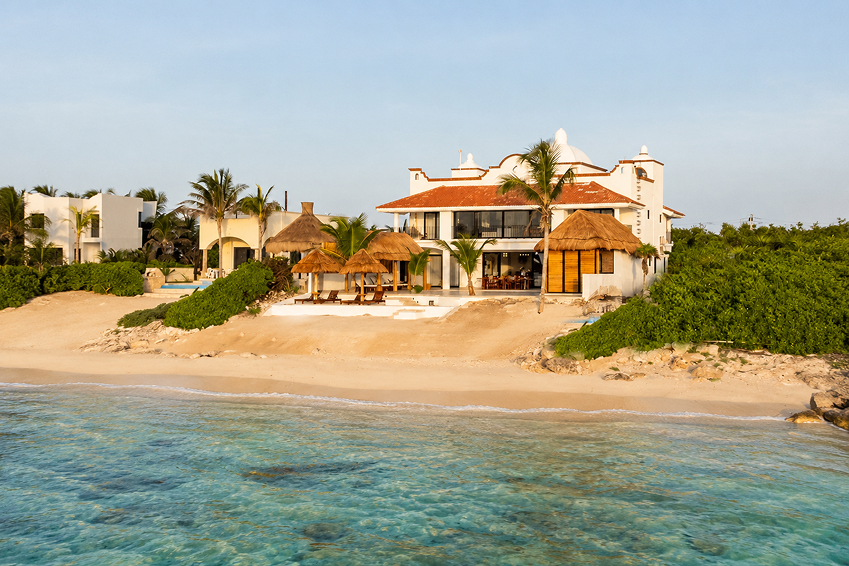
Bella Vita is a private villa in Tulum set in Tankah Bay, a small, curved cove about ten minutes north of the main hotel zone. This stretch of coast has a different physical setup than the long, open beach most people picture:
- A protective reef runs along Tankah Bay, buffering incoming swells and seaweed before they reach shore.
- The bay’s curved shape naturally reduces how much sargassum accumulates compared to the fully exposed, straight coastline further south.
- Lower visitor traffic and a smaller residential community can make shoreline maintenance more manageable than along Tulum’s busy public hotel zone.
Tankah Bay is consistently one of the better-protected stretches of coastline in the Tulum area, though no beach on this coast can honestly guarantee zero sargassum every single day of peak season.
If Sargassum Shows Up During Your Stay
Even during sargassum season, Bella Vita works hard to maintain a clean beachfront for guests. The beach is cleaned regularly to remove seaweed as quickly as possible, helping preserve a more enjoyable beach experience. Combined with Tankah Bay’s reef-protected cove, which typically experiences less accumulation than Tulum’s open beachfront, this proactive approach helps guests enjoy cleaner beach conditions throughout their stay.
Guests can also spend part of the day exploring nearby freshwater cenotes such as Gran Cenote and Dos Ojos, relaxing by the private pool, visiting archaeological sites, or enjoying local dining while beach conditions continue to improve. At Bella Vita, guests can also enjoy luxury suites and an optional private chef dining experience, making it easy to make the most of their stay regardless of changing beach conditions.
Planning a Trip Around It
The clifftop Mayan ruins, cenotes, and the Sian Ka’an Biosphere Reserve are all unaffected by sargassum, and a wellness retreat built around the villa’s own grounds, such as sunrise yoga or a spa afternoon, runs the same way regardless of the ocean.
Travelers who mix beach time with these experiences often barely notice seaweed season.
Timing helps too. If you’re weighing the best time of year to visit Tulum, November through April generally brings the clearest water and driest weather, while shoulder months trade some predictability for lower rates and quieter beaches.
Seasonal sargassum forecasts published by organizations such as the University of South Florida’s Optical Oceanography Lab can also help travelers monitor regional seaweed activity before their trip.
Frequently Asked Questions
Is there sargassum in Tulum year-round?
Some can appear at any time, but it’s heaviest May through September and lightest November through March.
Is Tankah Bay affected by sargassum?
Yes, but its reef-protected cove typically sees less accumulation than Tulum’s open beachfront.
What’s the best month to visit for clear water?
November through March generally offers the clearest water and driest weather.
Can I still enjoy Tulum during peak sargassum season?
Yes. Access to a private pool, nearby cenotes, and other inland attractions means beach conditions have far less impact on the trip overall.
Is Tulum safe to visit?
Like many popular tourist destinations, Tulum is best enjoyed by following normal travel precautions, staying in well-established areas, and arranging transportation in advance. Be sure to check the latest official travel advisories before your trip.